
Understanding Upper Back Pain Physiotherapy
Finding effective Upper Back Pain Physiotherapy in Hyderabad is a vital step toward reclaiming your daily comfort. Many individuals experience discomfort in the thoracic region, often stemming from prolonged sedentary postures or repetitive daily activities that strain the upper spine. Understanding how to manage this through guided movement and professional oversight is essential for those seeking to reduce functional limitations and improve their long-term well-being while navigating the demands of modern life.
Rehabilitation is not reserved only for those with complex injuries; it serves as an essential health service designed to optimize your current functioning and reduce the impact of persistent pain. By focusing on strengthening self-management and addressing symptoms early, we can work together to help you regain your ability to participate in your favourite activities. Our goal is to provide clarity on how simple, controlled movements can support your musculoskeletal health and comfort at home.
Clinical reference: NHS: Back pain — UK National Health Service.
Clinical reference: WHO: Rehabilitation — World Health Organization.
Recognising the Impact of Persistent Back Discomfort
Upper back pain often makes simple tasks, such as reaching for items or sitting at a desk, feel burdensome and physically demanding. When pain persists, it can lead to a cycle of reduced activity, which ironically may hinder your natural recovery process. It is important to remember that back discomfort is common and frequently improves with consistent, gradual movement rather than complete inactivity or extended periods of rest in bed.
Consider an example where you find it difficult to complete your workday due to tension between your shoulder blades. You might find that your productivity drops as you constantly adjust your chair or stand up to stretch. By framing this through the lens of movement, you can start to identify which specific positions trigger discomfort. Recognizing these triggers is the first step in communicating effectively with a healthcare provider about your personal recovery goals.
Clinical reference: NHS: Back pain — UK National Health Service.
What Happens During a Clinical Assessment
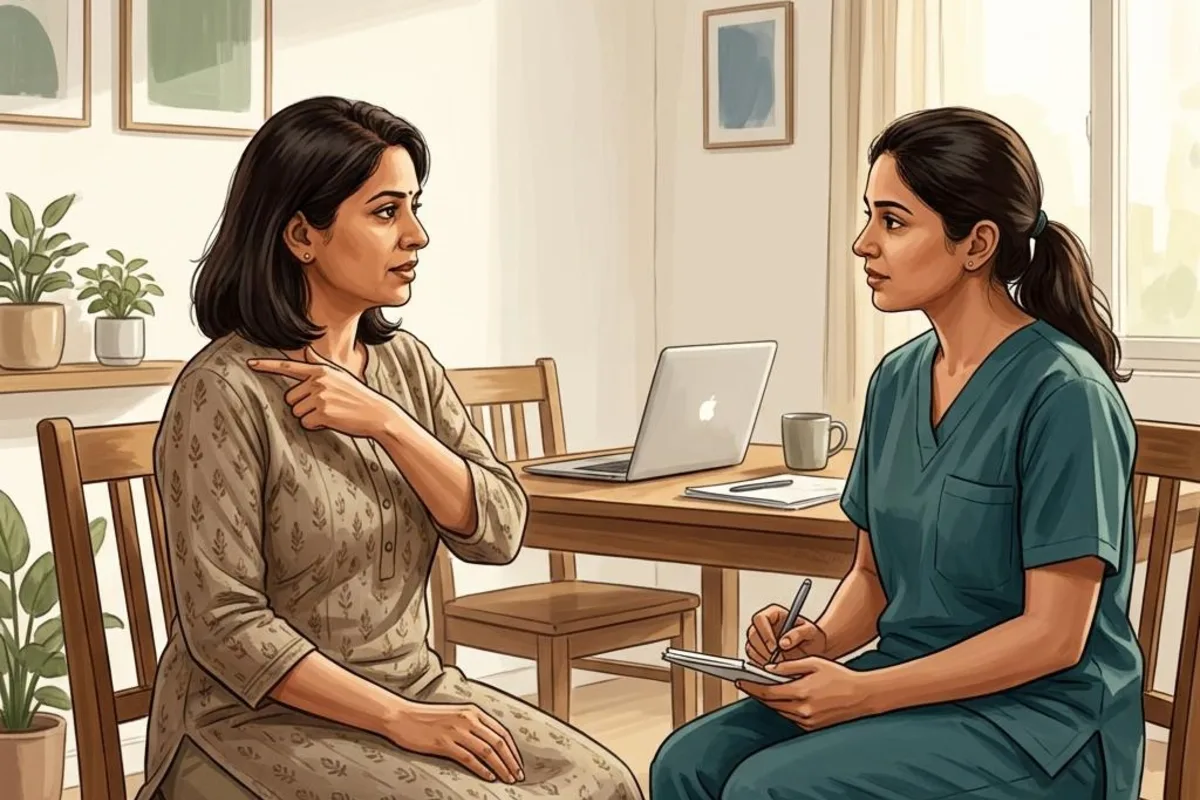
When you enquire about our services, a preliminary assessment helps us understand the unique nature of your upper back issues. This discussion is not a battery of intrusive tests, but rather an opportunity for us to learn about your daily challenges, physical history, and any specific goals you hope to reach. We evaluate how your symptoms respond to activity and rest, ensuring that any advice provided aligns with your personal circumstances.
During this conversation, we look at your ability to perform routine movements and identify any environmental factors that might be contributing to your pain. For residents in areas like Banjara Hills or Kondapur, home visits are coordinated based on individual assessment and area availability. This process ensures that if a service is provided, it is tailored specifically to your environment, helping you build a sustainable routine that fits into your existing lifestyle.
Clinical reference: WHO: Rehabilitation — World Health Organization.
Safe Rehabilitation Principles for Daily Life
The core principle of safe rehabilitation is the promotion of active recovery. Instead of avoiding movement, we encourage controlled activity to keep your muscles and joints functioning optimally. While it is natural to feel cautious, gentle movement helps in preventing stiffness and maintaining range of motion. We often discuss how to incorporate manageable activity levels into your schedule, ensuring you do not over-exert yourself while keeping the body engaged and fluid.
Environment modification is another pillar of safe recovery. This might involve adjusting the height of your workstation or reviewing how you carry household items to minimize undue strain on the upper spine. By strengthening your self-management skills, you gain the confidence to handle minor flare-ups independently. This proactive stance is supported by global rehabilitation standards that emphasize reducing disability through small, consistent changes rather than relying on quick fixes or passive treatments.
sourceIds
who-rehabilitation
nhs-back
Clinical reference: WHO: Rehabilitation — World Health Organization.
Clinical reference: NHS: Back pain — UK National Health Service.
Signs That Demand Immediate Medical Attention
While most upper back discomfort is manageable, there are specific symptoms that signal the need for urgent local emergency medical care. You must never wait for a consultation or a home physiotherapy visit if you experience sudden numbness in both legs, significant changes in your bladder or bowel control, or unexplained chest pain. These symptoms require an immediate evaluation by an emergency medical team to rule out serious underlying issues that go beyond standard musculoskeletal pain.
Additionally, any pain that is severe, sudden, or quickly worsening, especially following an accident or injury, should not be ignored. If you find that your back pain is accompanied by high fever, unintended weight loss, or difficulty breathing, seek professional help at a nearby hospital right away. Recognizing these red-flag symptoms is crucial for your safety; early intervention in a clinical setting is the correct path for emergencies that exceed the scope of home-based rehabilitation.
Clinical reference: NHS: Back pain — UK National Health Service.
Setting Realistic Goals for Your Recovery
Success in rehabilitation is best measured by your return to meaningful activities rather than a pain-free score alone. We suggest setting small, achievable goals, such as sitting comfortably at your desk for thirty minutes without needing to stand or walking for a specific duration without increased discomfort. These markers provide a sense of progress that keeps you motivated during the weeks when recovery feels slow, ensuring your efforts are focused on functional improvement.
Think of a hypothetical scenario where your goal is to comfortably carry your laptop bag during your commute. Instead of attempting this immediately, you might start with smaller movements that gradually increase the tolerance of your upper back muscles. By setting these manageable objectives, you foster a sense of control over your body. Remember, rehabilitation is a journey of consistency; setting realistic expectations prevents frustration and supports a more sustainable approach to physical recovery.
Clinical reference: WHO: Rehabilitation — World Health Organization.
Considerations for Home and Caregivers
Creating a supportive home environment can significantly accelerate the recovery process. This involves organizing your frequently used items at a height that prevents constant bending or reaching, which reduces the load on your thoracic spine. If you live with family members, involving them in your recovery process can be helpful. Explaining your goals to them allows for consistent support, especially when it comes to maintaining a routine or adjusting the home layout for better ergonomics.
Caregivers play a vital role in providing encouragement and helping you remain consistent with your activity levels. However, it is essential that family members support your autonomy rather than taking over tasks that you are capable of doing yourself. The objective is to foster independence. When everyone in the household understands the importance of staying active, it creates an environment where physical health becomes a shared priority rather than just an individual burden.
Clinical reference: WHO: Rehabilitation — World Health Organization.
Context Regarding Local Enquiry in Hyderabad
At PhysioGood, we offer a dedicated route for those seeking home-physiotherapy in Hyderabad, including areas such as Banjara Hills and Kondapur. It is important to understand that every enquiry undergoes an initial suitability check. Our service is not a walk-in clinic, nor is coverage guaranteed for every location. Availability is subject to the specific needs of the patient and our current schedule, ensuring that we can provide focused, quality attention to each person we support.
We are an independent service and are not affiliated with large hospital departments such as those managed under MoHFW, nor do we act as representatives of the Indian Medical Association. Our role is strictly to provide evidence-informed, home-based physiotherapy services where appropriate. By understanding this context, you can better manage your expectations regarding how we operate, how we determine our service areas, and how we coordinate our visits based on professional assessment.
Clinical reference: WHO: Rehabilitation — World Health Organization.
Organisational context: MoHFW: VMMC and Safdarjung Hospital rehabilitation services — Ministry of Health and Family Welfare, Government of India.
Organisational context: Indian Medical Association: organisational role — Indian Medical Association.
Frequently Asked Questions About Back Health
A common question we receive is whether one should stop all activity when experiencing back pain. The answer is generally no; prolonged bed rest can often lead to further stiffness and muscle weakness. Unless advised otherwise by a GP, it is better to continue with your daily activities to the best of your ability. Simple, low-impact movement is often the best medicine, helping you to remain functional while your body works on the natural healing process.
Another frequent enquiry involves the use of heat or cold packs to manage pain. Both can be effective, but they work in different ways to soothe discomfort. Heat is often helpful for relaxing tight muscles, while cold packs can be useful for reducing inflammation during acute flare-ups. Choosing between them often comes down to personal preference. Combining these with anti-inflammatory medications as recommended by a doctor can help manage symptoms while you work toward long-term recovery.
Clinical reference: NHS: Back pain — UK National Health Service.
Navigating Persistent Pain and General Practitioner Guidance
If your upper back pain does not show signs of improvement after a few weeks of consistent self-management, it is important to schedule a visit with your General Practitioner. A GP can perform a thorough evaluation to identify any underlying causes that might require more specialized attention. They are the best point of contact for determining when additional diagnostic steps or specific medical interventions are necessary to support your ongoing recovery and physical well-being.
Struggling to cope with pain on a daily basis is also a valid reason to seek professional medical advice. If your discomfort is stopping you from completing your work or participating in social activities, please do not feel you must manage it alone. A doctor can offer guidance on managing your pain safely and help coordinate any specialized services you might require. Seeking help when you are struggling is a sign of proactive health management.
Clinical reference: NHS: Back pain — UK National Health Service.
Commitment to Your Long-Term Movement Comfort
Our dedication to your comfort involves providing a clear path for home-based physiotherapy, ensuring that your individual needs are met with professionalism and care. Whether you are dealing with desk-related strain or general muscular tension, our focus remains on helping you move better and feel more capable in your daily life. By relying on established clinical principles and keeping the focus on function, we aim to be a partner in your physical health journey.
We encourage you to reach out when you are ready to start your recovery, keeping in mind that availability and suitability are part of our initial consultation process. By maintaining a consistent dialogue about your progress and any changes in your symptoms, we work together to refine your plan over time. Thank you for considering us as your partner in managing upper back health in Hyderabad, where we aim to provide reliable, professional support for your movement goals.
Clinical reference: WHO: Rehabilitation — World Health Organization.
Clinical reference: NHS: Back pain — UK National Health Service.
References and context
Sources behind this article
These references provide background for the information above; they do not imply that PhysioGood is endorsed, approved or clinically reviewed by any organisation.
- Clinical referenceNHS: Back painUK National Health Service · Checked 3 October 2026
- Clinical referenceWHO: RehabilitationWorld Health Organization · Checked 3 October 2026
- Organisational contextMoHFW: VMMC and Safdarjung Hospital rehabilitation servicesMinistry of Health and Family Welfare, Government of India · Checked 3 October 2026
- Organisational contextIndian Medical Association: organisational roleIndian Medical Association · Checked 3 October 2026
The Indian Medical Association is a voluntary national organisation of doctors, not a government regulator. This link is included only to describe the organisation; it is not an endorsement or review of PhysioGood.
Clinical references and government or organisational service descriptions have different purposes. A hospital service description is contextual information, not clinical evidence. No WHO, Ministry of Health or IMA approval or clinical review of PhysioGood is claimed.
A question about home physiotherapy?
Start with what you would like to understand.
An enquiry is not a confirmed appointment. The team can discuss your request and available next steps.