
01 / Getting ready
Before the visit
After you send a request, the PhysioGood team follows up to discuss your locality and the next step. An enquiry is not a confirmed appointment; availability and coverage for your exact Hyderabad address need to be checked. You can share the broad reason for your request without putting detailed medical history in the initial enquiry.
What to keep ready
Relevant records
Keep any recent prescriptions, scan reports, discharge summary or referral advice handy if you have them. You do not need to gather new tests just for the visit.
A little room to move
A chair and a clear, well-lit space are usually helpful. Wear comfortable clothes that let you move and allow the area of concern to be assessed.
Your everyday context
Think about the activities that have become difficult: getting out of bed, climbing stairs, walking to the bathroom or returning to work, for example.
Someone to join, if useful
A family member or caregiver may join the conversation with your permission, especially if they help with movement or daily routines.
If you have been given restrictions after surgery or by another treating clinician, tell the physiotherapist before trying any movement.
02 / At home
What the assessment may involve
The physiotherapist will first listen: when the concern began, how it has changed, what makes it better or worse, relevant medical information and what matters most in daily life. Be open about falls, pain, dizziness or any change in symptoms. You can ask why a question or movement test is relevant.
Movement and function
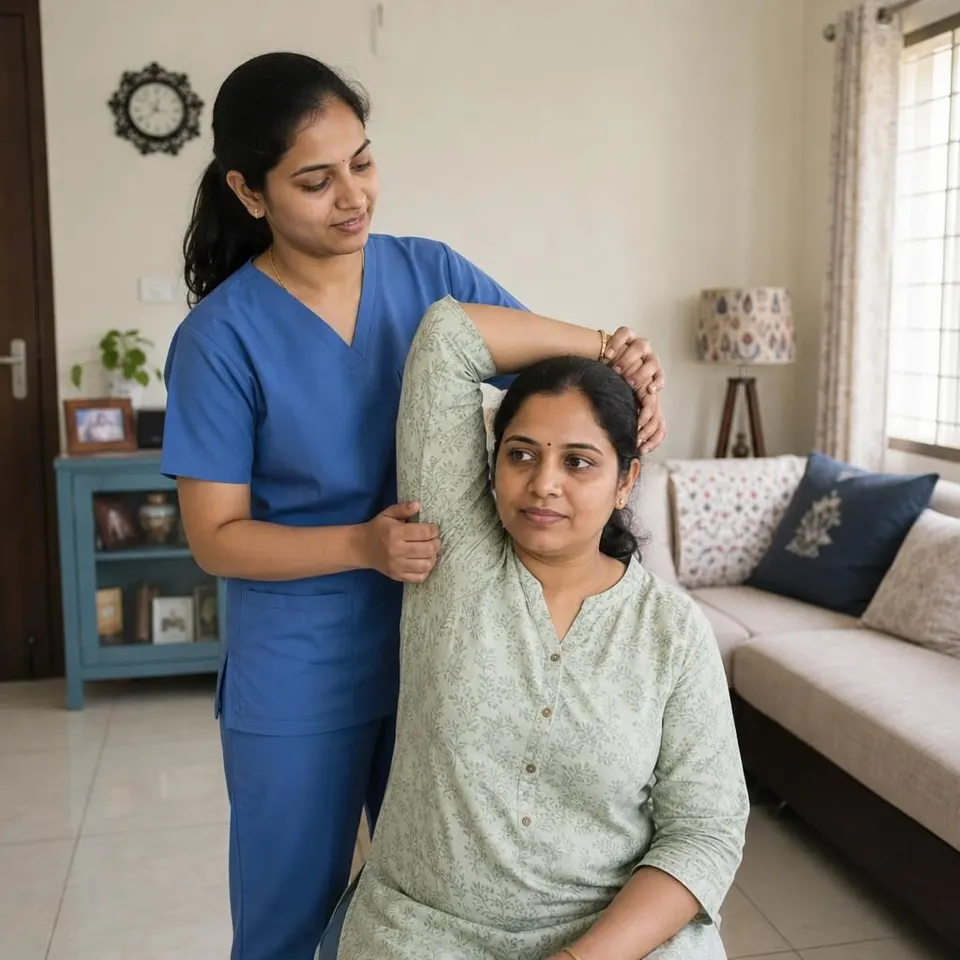
Depending on your situation, they may observe posture, joint movement, strength, balance, walking or a task that is difficult for you. An assessment at home can also show how your usual chair, stairs or other surroundings affect movement.
Comfort and consent
Tell them if a movement hurts or you feel unsafe. You can ask for an explanation, request a pause, or decline a part of the examination. The assessment should be adapted to what is appropriate for you.
A plan, not a fixed script
The next steps may include movement guidance, exercises to practise, ways to make everyday tasks easier, or advice to seek medical review. The plan and any need for follow-up depend on the assessment; treatment is not assumed before it.
03 / Next steps
Leave knowing what comes next
Before the visit ends, make sure you understand any suggested home practice, how often to do it, and when to ask for help. If a family member helps you at home, you can ask for them to hear the guidance too.
Questions worth asking
- What do you think is contributing to my movement difficulty?
- Which activities are safe to practise between visits, and what should make me stop?
- What should I do if symptoms change or an exercise feels worse?
- How will we know whether the plan is helping, and when should it be reviewed?
There is no need to remember everything at once. Ask for instructions to be repeated or clarified before practising on your own.
A note on safety
When not to wait for a home visit
PhysioGood is not an emergency service. If you have sudden severe weakness or paralysis, facial droop, difficulty speaking, chest pain, severe breathing difficulty, loss of consciousness, major trauma or uncontrolled bleeding, seek immediate medical attention or call local emergency services. Do not wait for a booking response.
For non-urgent concerns, tell your treating doctor or physiotherapist about new or worsening symptoms so they can advise on the right next step. Read our medical disclaimer for the limits of website information.