
PHYSIOGOOD CARE GUIDE / HYDERABAD
A practical guide to understanding your next step
Published by PhysioGood. General patient information, not a diagnosis or an individual exercise prescription. Supporting sources are listed below.
Sports and fitness rehabilitation is relevant to recreational activity as well as organised sport. A runner, a weekend cricket player and someone returning to gym exercise may have different goals and physical demands. This guide explains how to discuss sports injuries, strengthening and a considered return to activity when enquiring about physiotherapy in Hyderabad.
Rehabilitation should match the activity
The phrase sports injury does not identify a single problem. A sore shoulder during swimming, an ankle injury after a misstep and knee symptoms while changing direction can require different assessment. Tell the clinician what you were doing, how the concern started and which activities you can currently manage. Previous injuries, medical advice and changes in training are useful context.
A rehabilitation plan should connect current ability with the demands of the activity you want to resume. General exercise may be part of the process, but it does not automatically establish readiness for running, jumping or competitive play. Physiotherapy can help assess movement needs; it cannot promise that every injury can be managed at home or that a return will happen by a particular event date.
Understanding an injury before choosing exercises
Describe the mechanism of injury, any immediate loss of function and how symptoms have changed. The clinician may consider movement, strength and relevant tasks where appropriate. If you have already been examined or given imaging findings, share that information. You do not need to assign yourself a diagnosis based on where it hurts.
Some sports injuries need medical assessment before exercise is considered. A suspected fracture, significant deformity, inability to bear weight after trauma or a rapidly worsening condition should not be tested with a home routine. The assessing professional may recommend a doctor’s review or further information. Starting rehabilitation responsibly sometimes means clarifying the problem rather than beginning with resistance exercises immediately.
Muscle strains, ligament injuries and sprains
A muscle strain may affect activities such as acceleration, lifting or changing pace. A ligament sprain may affect the stability and comfortable use of a joint. The location, severity and stage of healing influence the plan. Do not treat all strains as a need for stretching or all sprains as a reason to stop movement indefinitely.
After assessment, guidance may address suitable movement, progressive strengthening and relevant task demands. The amount and type of loading should reflect the injury and response. Less discomfort on a particular day does not prove that tissue is ready for unrestricted activity. Equally, a programme should not remain unchanged simply because it was useful at the beginning. Review helps establish when an adjustment is justified.
Ankle, knee, tendon and shoulder concerns
Ankle sprains, hamstring or calf strains, knee ligament concerns and shoulder sports injuries are examples of topics you can raise. Tendon symptoms may also affect training and daily activity. These labels help organise an enquiry; they do not confirm the diagnosis or the availability of every specialist treatment.
Describe the particular demand that is difficult, such as repeated steps, a racket swing, a squat or reaching overhead. Your clinician may need to separate an injury-related limitation from other factors such as activity tolerance or medical concerns. A programme for one joint or sport should not be assumed to fit another. Ask how the suggested exercise relates to your goals and what limits apply between reviews.
Strength and conditioning within rehabilitation
Strength and conditioning can support a return to selected physical demands when an exercise programme is suitable. The starting point should reflect current capacity, technique, symptoms and medical advice. Gym experience is useful information, but being experienced does not remove the need to assess an injury or respect restrictions.
A physiotherapist may discuss appropriate resistance exercises and activity progression as part of the rehabilitation plan. You should understand the purpose of the exercise, the intended effort and how the plan will be reviewed. This page does not set weights, repetitions or exercise frequency because those choices need individual guidance. A rehabilitation service is also not automatically a full sport-performance or coaching programme; clarify the intended scope.
Return-to-sport decisions involve more than pain
Someone may feel comfortable with daily walking while still finding running, jumping or changing direction difficult. A return-to-sport conversation therefore needs to consider the actual activity, relevant function and any medical restrictions. Pain is one useful observation, not the only criterion. Confidence and the ability to manage the required tasks may also be part of the discussion.
The clinician can help outline what needs review before increasing activity, and whether another specialist assessment is appropriate. Returning to training is not necessarily the same as being ready for competition. Avoid treating a fixed calendar date as proof of readiness. If you have an event or work demand coming up, share it early so expectations can be discussed without a promise of accelerated healing.
Injury prevention without unrealistic guarantees
People sometimes seek physiotherapy because they want to train more consistently or reduce avoidable problems. An assessment may consider movement concerns, previous injuries and how physical demands have changed. Suitable strengthening and activity planning may be useful, but no exercise programme can guarantee that an injury will not occur.
A helpful discussion is specific to your routine. Explain how often you practise, which activities you have recently added and how you recover between them. Avoid attributing an injury to one imperfect movement or a single weak muscle without assessment. Prevention-oriented advice should support informed choices and manageable demands, not create fear of ordinary movement or sell certainty that the clinician cannot provide.
Balancing rehabilitation with work and everyday demands
An injury can affect more than sport. Walking to work, standing during a shift, driving or carrying shopping may influence the demands on the affected area. Tell the physiotherapist about these activities so the home plan is not designed around training alone. A realistic routine accounts for what you already need to do each day.
Discuss which tasks can be modified and which require other advice. The aim is not to make you choose between complete rest and unrestricted training. A clinician can help consider appropriate activity within the assessed situation. If instructions are difficult to follow at work or home, explain the barrier rather than assuming the programme is impractical or changing its loading without guidance.
What sports rehabilitation at home can and cannot do
Home physiotherapy may be useful for assessment and selected rehabilitation activities where the setting is suitable. It can help relate an exercise plan to the space and equipment actually available. However, some sporting demands require facilities, equipment or specialist testing that a routine home visit cannot provide.
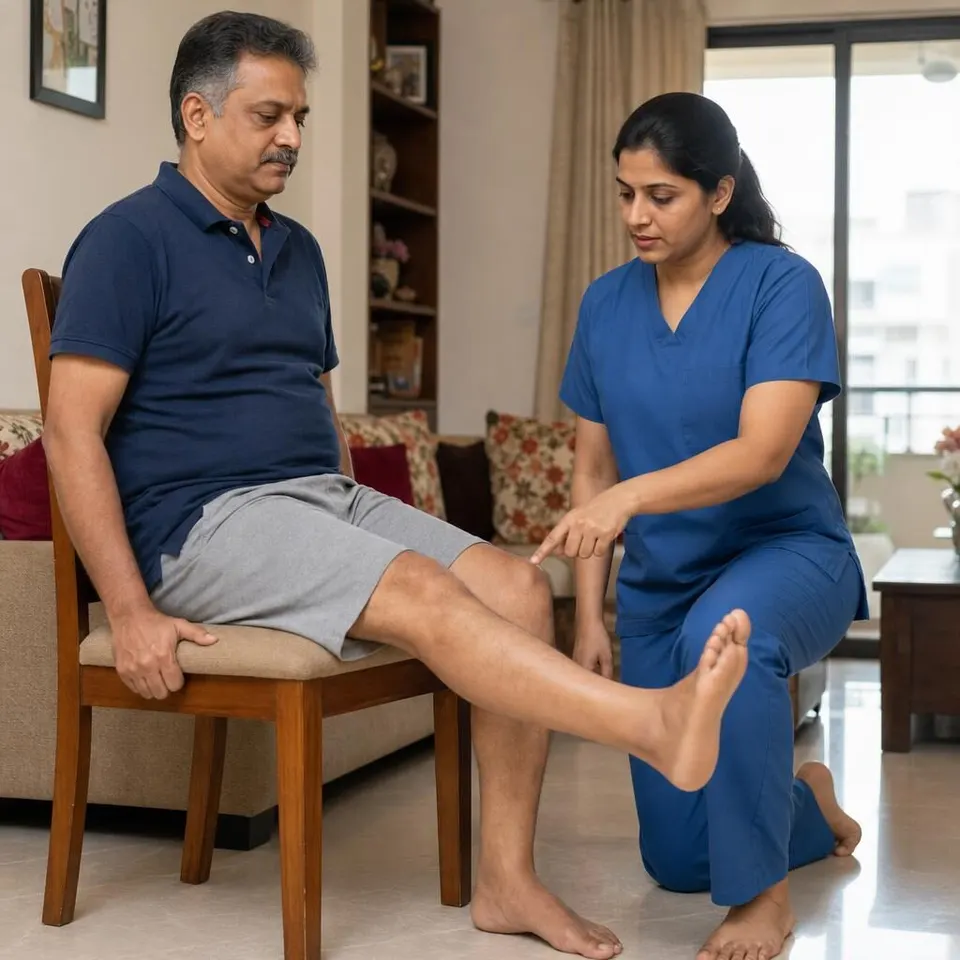
Ask whether your intended goals can be addressed at home and what later assessment might be needed. You do not have to buy resistance bands, weights or balance equipment before the clinician considers the problem. Equipment choice should follow the plan. Photographs on the site are illustrative, not instructions to copy a movement or evidence that a particular device or technique is included in every session.
Reviewing response and adapting the plan
A useful review considers the exercises you could complete, symptom behaviour and the activities that remain limited. Tell the clinician if practice is becoming easier, unexpectedly harder or difficult to fit into the week. There is no requirement for every review to add a harder exercise; consolidating a suitable task or changing a less helpful one may be appropriate.
A setback should be discussed in context rather than hidden so you can keep training. New injury, persistent deterioration or a change in function may need reassessment or medical review. The clinician should explain what responses are expected for your particular plan and when to seek advice. The website cannot establish safe symptom limits or clear you for activity without an individual assessment.
Sports injury physiotherapy enquiries in Hyderabad
When enquiring about sports injury physiotherapy in Hyderabad, mention the activity, affected area, approximate onset and your locality. The site offers locality information for areas such as Gachibowli, Madhapur, Kondapur, Jubilee Hills and Banjara Hills, alongside other selected Hyderabad guides. Exact address coverage and clinician availability are confirmed after an enquiry, not by the presence of an area page.
You can ask about muscle or ligament injuries, return-to-activity goals, strengthening and injury-prevention discussions without selecting a treatment yourself. If you have surgery-related restrictions, state them clearly. An online consultation may help with exercise review or some movement questions where suitable; it does not replace every physical examination, medical assessment or sport-specific evaluation.
When an injury needs medical attention first
Seek prompt medical advice after a serious injury, significant deformity, new inability to bear weight or a major loss of function. Chest pain, severe breathing difficulty, sudden neurological symptoms or uncontrolled bleeding require urgent medical care rather than a sports rehabilitation enquiry. Follow any warning-sign instructions already given by your treating team.
This guide cannot rule out a fracture, serious tissue injury or other medical problem. If the severity or urgency is uncertain, contact an appropriate healthcare service. PhysioGood’s enquiry route is not an emergency assessment and should not delay care for an acute concern.
HOME VISITS IN HYDERABAD
A local first step
PhysioGood offers home physiotherapy across listed Hyderabad localities. A locality page is a starting point, not a coverage guarantee: the team confirms availability for your exact address before a visit is agreed.
- Jubilee Hills
- Banjara Hills
- HITEC City
- Gachibowli
- Madhapur
- Kondapur
- Secunderabad
- Begumpet
- Somajiguda
- Punjagutta
- Ameerpet
- SR Nagar
- Sanath Nagar
- Erragadda
- Moosapet
- Kukatpally
- KPHB Colony
- Miyapur
- Hafeezpet
- Chandanagar
- Serilingampally
- Nallagandla
- Tellapur
- Nizampet
- Bachupally
- Raidurg
- Shaikpet
- Manikonda
- Financial District
- Nanakramguda
- Kokapet
- Narsingi
- Tolichowki
- Mehdipatnam
- Masab Tank
- Lakdikapul
- Khairatabad
- Nampally
- Abids
- Hyderguda
- Basheerbagh
- King Koti
- Koti
- Afzalgunj
- Charminar
- Kanchanbagh
- Santosh Nagar
- Attapur
- Rajendranagar
- Shamshabad
- Malakpet
- Dilsukhnagar
- Kothapet
- LB Nagar
- Vanasthalipuram
- Hayathnagar
- Uppal
- Habsiguda
- Tarnaka
- Nacharam
- Boduppal
- Medipally
- Pocharam
- Ghatkesar
- Musheerabad
- Padmarao Nagar
- Malkajgiri
- Sainikpuri
- AS Rao Nagar
- Kapra
- Alwal
- Bowenpally
- Kompally
- Suchitra
- Jeedimetla
- Quthbullapur
- Patancheru
Exact-address coverage is confirmed with the care team, along with suitability and availability.
GOOD TO KNOW
Questions people often ask
Is this service only for professional athletes?
No. You can enquire about movement concerns related to recreational sport, fitness or a return to ordinary activity. The appropriate assessment and rehabilitation depend on the concern and goals, not whether you compete professionally.
Can you tell me when I will run again?
A fixed date cannot be given from a website or an initial enquiry. Readiness depends on the problem, function, medical guidance and activity demands. A clinician can discuss appropriate goals and review criteria after assessment.
Should I stretch a muscle strain immediately?
Do not assume stretching is appropriate simply because the injury involves a muscle. The severity, timing and current symptoms need consideration. Seek assessment or medical advice when required, and follow an individual plan rather than a generic injury routine.
Can I use the same programme for injury prevention later?
Possibly, but it should be reviewed as your activity and goals change. A rehabilitation programme is designed around a particular starting point and may not suit unrestricted training later. Ask how ongoing exercise should be adapted.
FURTHER READING