HOME PHYSIOTHERAPY · HYDERABAD

Find a starting point
that feels like yours.

Browse common reasons people explore physiotherapy at home. These guides help you describe what you’re noticing; they are not diagnoses.

13 care guides shown

Find a place to start

Movement support, mapped to you.

Choose an area to explore the related home-physiotherapy service. You do not need to diagnose the cause before you enquire.

Illustrated body map of physiotherapy servicesA full-length human figure with simplified muscles and distinct shoulders, arms, elbows, forearms, hands, hips, knees, calves, ankles and feet. Clickable arrow callouts point to related existing services.Neck & backShoulder &upper limbHips & kneesWalking &balanceIllustrative guide · not to scaleIllustrated body map of physiotherapy servicesA full-length human figure with simplified muscles and distinct shoulders, arms, elbows, forearms, hands, hips, knees, calves, ankles and feet. Clickable arrow callouts point to related existing services.Neck & backShoulder &upper limbHips & kneesWalking &balance

Tap a labeled arrow or choose a service below.

Neck & back

Talk through stiffness, movement or everyday tasks that feel difficult. Assessment helps shape a practical next step.

Hips, knees & joints

Discuss joint stiffness or movement that is getting in the way of your routines and goals.

Walking & balance

Explore support for steadiness, transfers and walking around your home and community.

Choose a place to begin

Care conversations for real-life movement.

These service options can help you describe what you are looking for. You do not need to decide on treatment before speaking with us.

04 care options

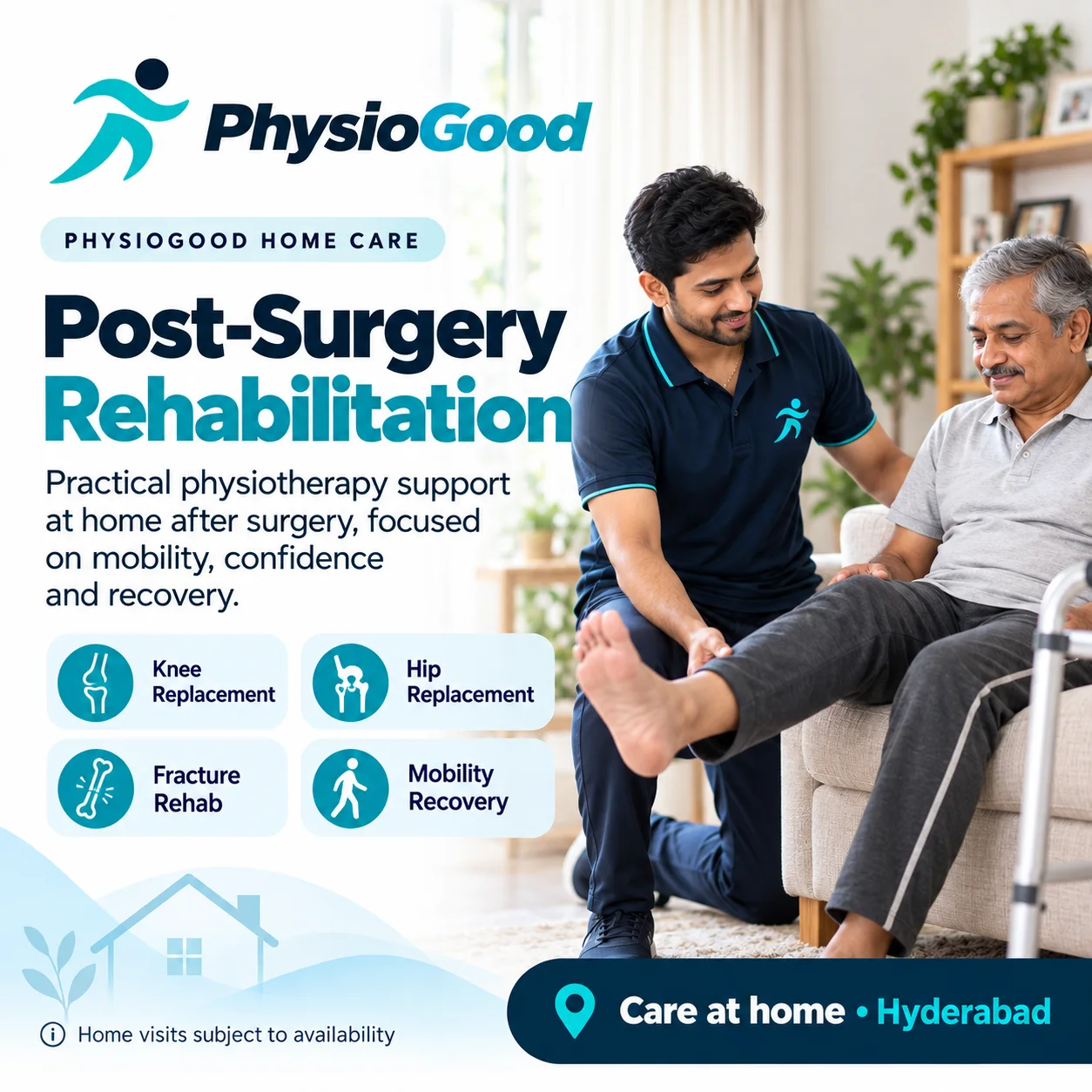
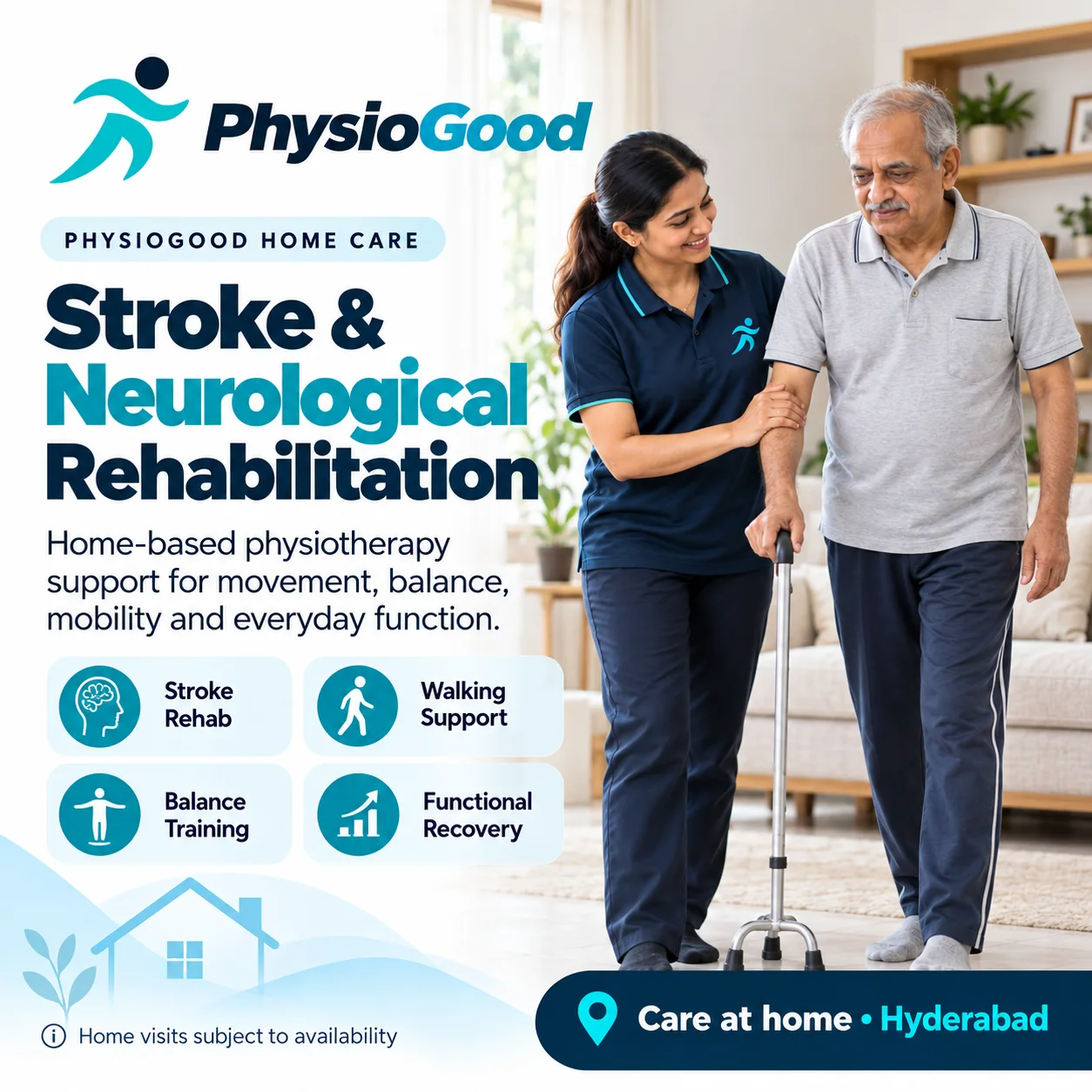
The posters are illustrative service artwork, not photographs of PhysioGood patients or staff. A visit is only arranged after the team reviews location, suitability and availability; sending an enquiry does not confirm a booking.
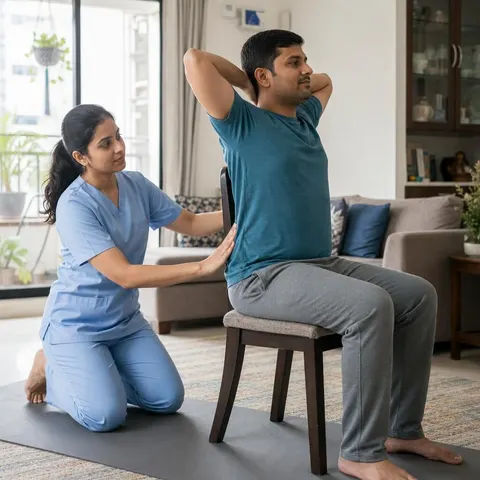
Physiotherapist guiding a man through movement at homeIllustrative image

Back & neck pain physiotherapy

Understand discomfort and find a considered way to move with more ease.

Common areas to discuss
  • Lower back pain
  • Upper back pain
  • Neck pain
  • Cervical pain
  • Cervical spondylosis
  • Sciatica
  • Posture-related pain
  • Back stiffness
  • Neck stiffness
Explore this care guide
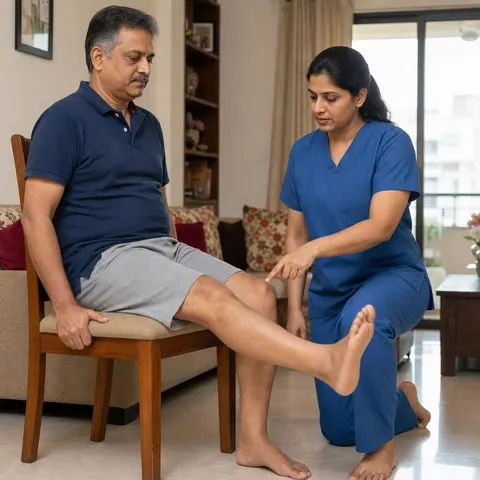
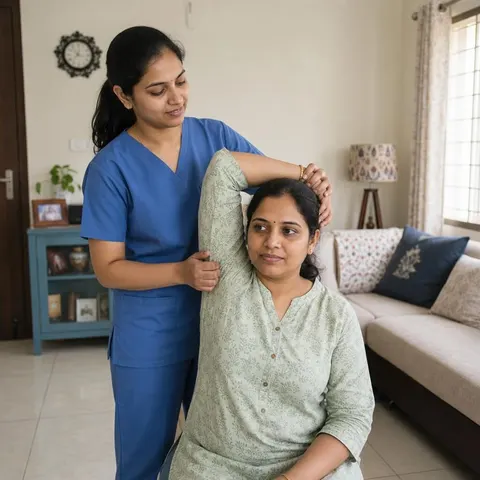
Physiotherapist guiding a seated man through a knee movement exerciseIllustrative image

Knee & joint pain physiotherapy

Assessment-led movement support for knees, hips and other joints.

Common areas to discuss
  • Knee pain
  • Knee osteoarthritis
  • Hip pain
  • Hip osteoarthritis
  • Joint stiffness
  • Ankle pain
  • Foot pain
  • Heel pain
  • General joint pain
Explore this care guide
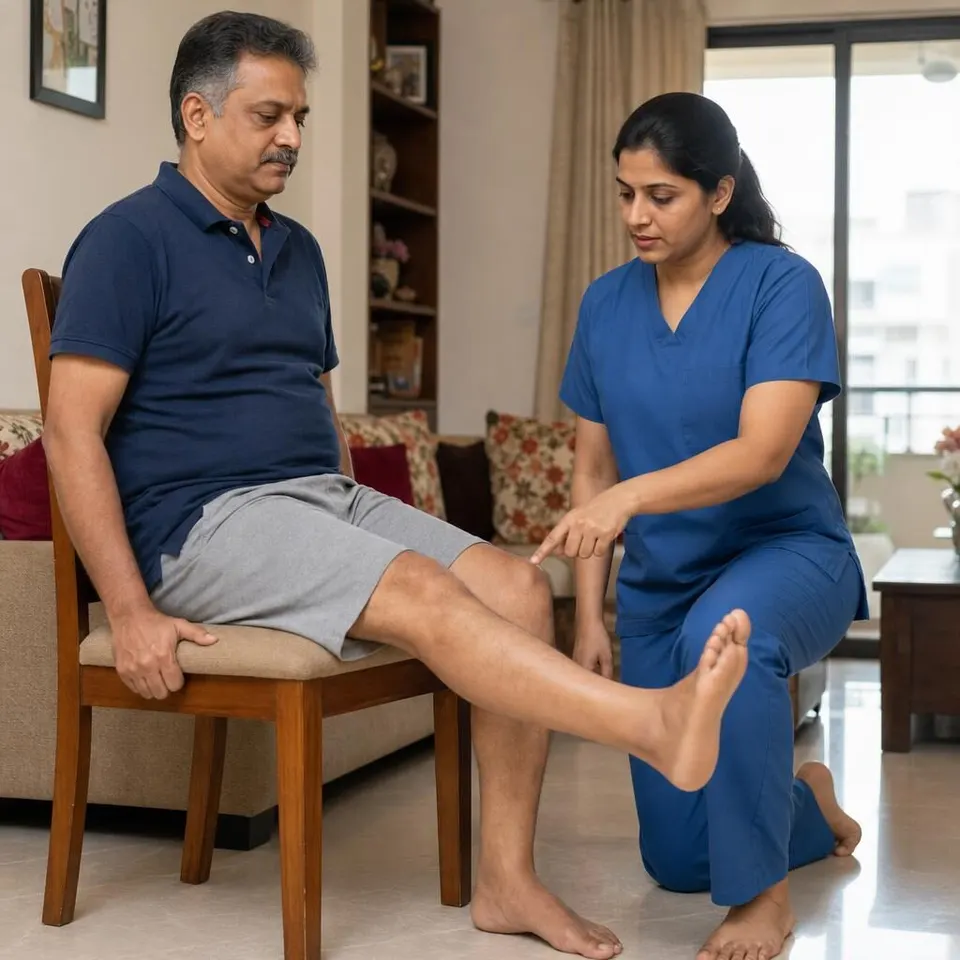
Physiotherapist guiding a seated woman through shoulder movement at homeIllustrative image

Shoulder & upper limb physiotherapy

Practical guidance for shoulder, arm, elbow, wrist and hand movement.

Common areas to discuss
  • Shoulder pain
  • Frozen shoulder
  • Rotator cuff rehabilitation
  • Shoulder stiffness
  • Tennis elbow
  • Golfer’s elbow
  • Elbow pain
  • Wrist pain
  • Hand rehabilitation
Explore this care guide
Physiotherapist guiding a seated man through a knee movement exerciseIllustrative image

Post-surgical rehabilitation

A measured return to movement following surgery, guided by your clinical advice.

Common areas to discuss
  • Knee replacement rehabilitation
  • Hip replacement rehabilitation
  • ACL rehabilitation
  • Meniscus rehabilitation
  • Shoulder surgery rehabilitation
  • Rotator cuff surgery rehabilitation
  • Spine surgery rehabilitation
  • Fracture rehabilitation
  • Physiotherapy after cast removal
  • Joint replacement rehabilitation
  • Ligament & tendon surgery rehabilitation
  • General post-operative mobility & strengthening
Explore this care guide
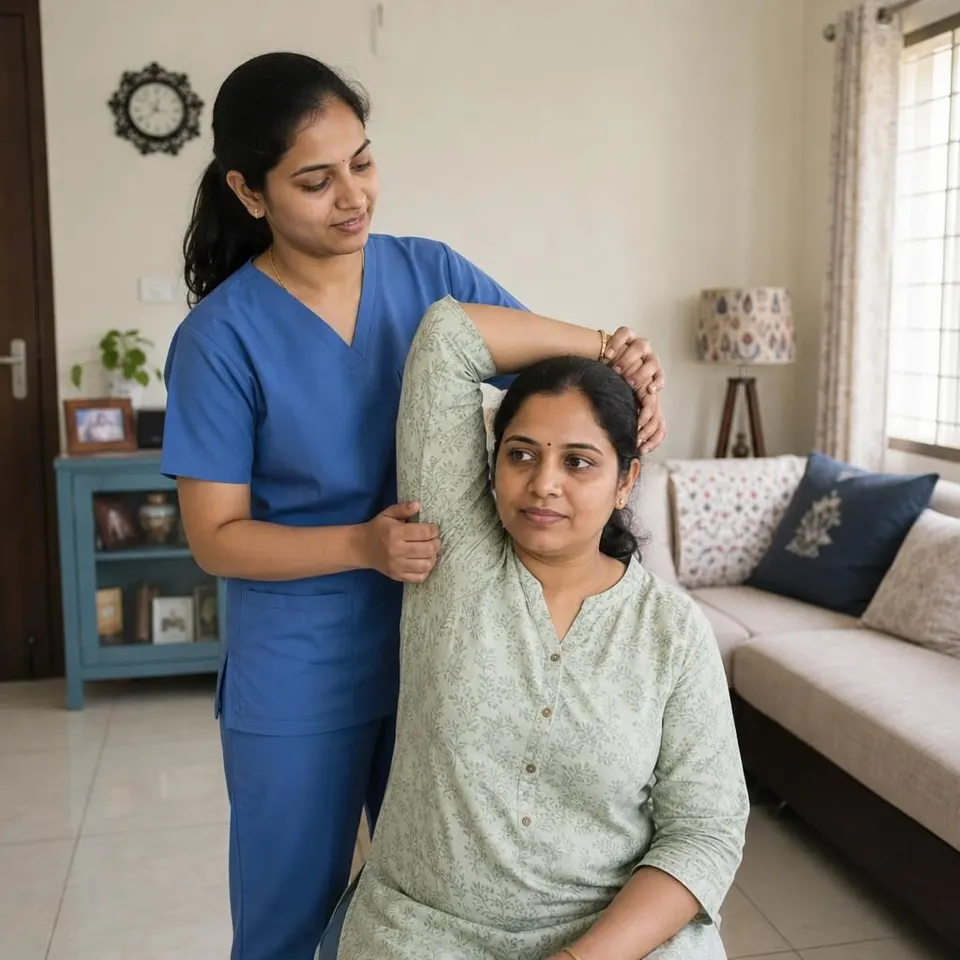
Physiotherapist guiding a seated woman through shoulder movement at homeIllustrative image

Neurological physiotherapy

Patient, structured support for everyday movement after neurological changes.

Common areas to discuss
  • Stroke rehabilitation
  • Hemiplegia rehabilitation
  • Hemiparesis rehabilitation
  • Walking rehabilitation after stroke
  • Balance rehabilitation after stroke
  • Parkinson’s rehabilitation
  • Neuro mobility training
  • Coordination training
  • Functional neuro rehabilitation
  • Spinal cord injury rehabilitation
  • Peripheral nerve conditions
  • Balance & coordination problems
  • Gait & walking rehabilitation
  • Weakness & mobility training
Explore this care guide
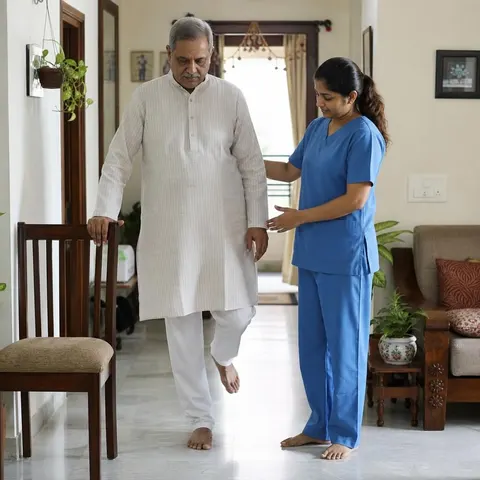
Older man practising balance beside a chair with a physiotherapist at homeIllustrative image

Geriatric physiotherapy

Thoughtful support for strength, balance and confidence at home.

Common areas to discuss
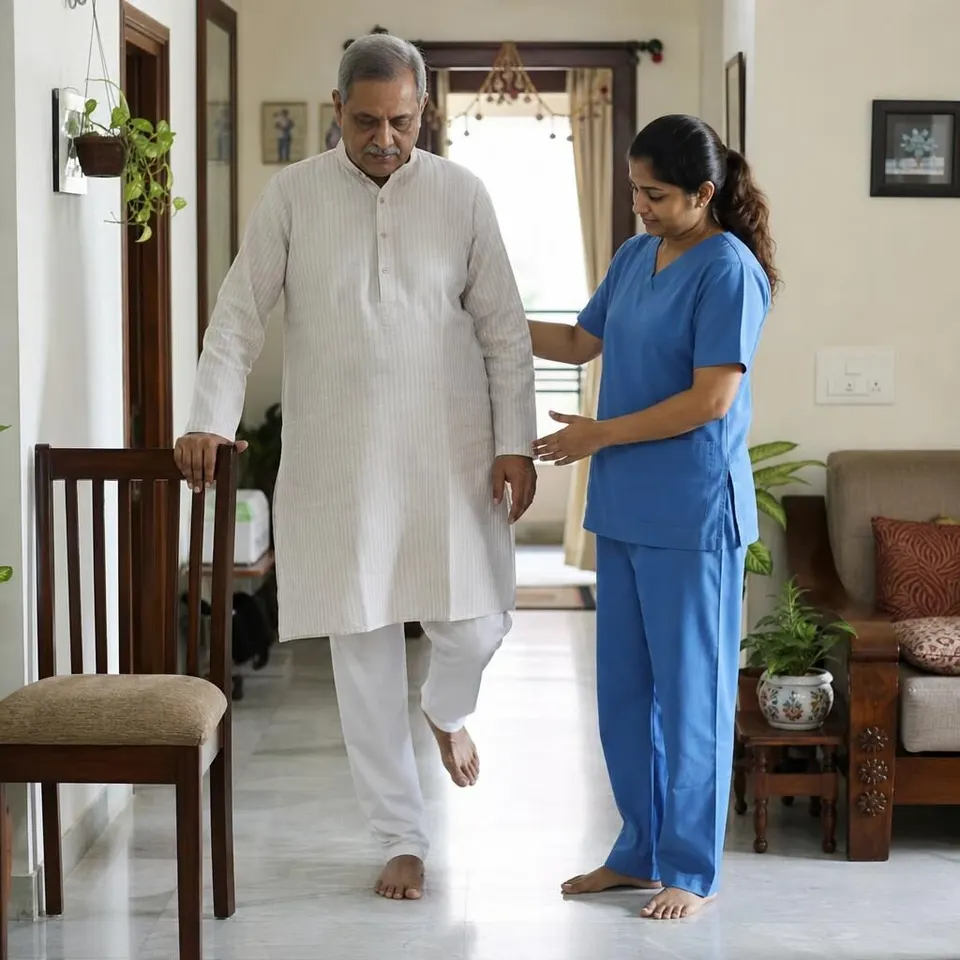
  • Elderly mobility rehabilitation
  • Walking training for elderly
  • Balance training for elderly
  • Fall prevention
  • Strength training for elderly
  • Frailty rehabilitation
  • Age-related weakness rehabilitation
  • Bed mobility training
  • Transfer training
  • Sit-to-stand training
  • Mobility training
  • Balance training
  • Strength & conditioning
  • Functional independence training
Explore this care guide
Older man practising balance beside a chair with a physiotherapist at homeIllustrative image

Walking & balance rehabilitation

Practice for everyday mobility, steadiness and confidence.

Common areas to discuss

  • Gait training
  • Walking training
  • Balance training
  • Fall prevention
  • Transfer training
  • Stair training
  • Walker training
  • Walking aid training
  • Functional mobility training
Explore this care guide
Physiotherapist guiding a seated man through a knee movement exerciseIllustrative image

Sports & fitness rehabilitation

A progressive return-to-activity path for active bodies.

Common areas to discuss

  • Ankle sprain rehabilitation
  • Muscle strain rehabilitation
  • Hamstring rehabilitation
  • Calf strain rehabilitation
  • Knee ligament rehabilitation
  • ACL injury rehabilitation
  • Meniscus injury rehabilitation
  • Shoulder sports injury rehabilitation
  • Tendon rehabilitation
  • Return-to-activity rehabilitation
  • Sports injuries
  • Muscle & ligament injuries
  • Return-to-sport rehabilitation
  • Strength & conditioning
  • Injury prevention
Explore this care guide
Physiotherapist guiding a seated woman through shoulder movement at homeIllustrative image

Post-hospital recovery

Support for rebuilding everyday movement after a hospital stay.

Common areas to discuss
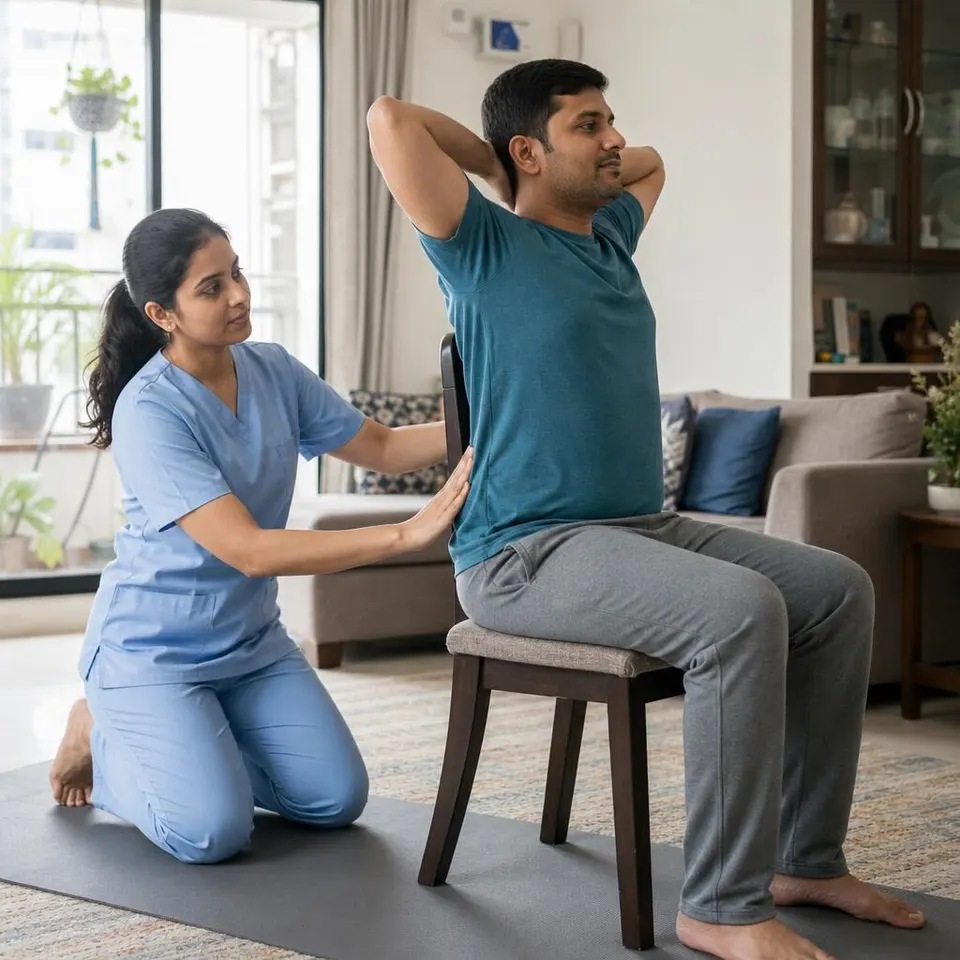
  • Post-hospitalisation rehabilitation
  • Deconditioning rehabilitation
  • Mobility recovery
  • Strength recovery
  • Walking rehabilitation
  • Functional reconditioning
  • Bed mobility
  • Transfer training
Explore this care guide
Physiotherapist guiding a man through movement at homeIllustrative image

General physiotherapy at home

An assessment-led starting point when you are not sure which service fits.

Common areas to discuss

  • Physiotherapy assessment
  • Pain management
  • Exercise therapy
  • Strengthening exercises
  • Mobility training
  • Flexibility training
  • Posture correction
  • Functional rehabilitation
  • Home exercise program
Explore this care guide
Physiotherapist guiding a seated woman through shoulder movement at homeIllustrative image

Women's physiotherapy

Private, respectful care for movement and recovery through life stages.

Common areas to discuss

  • Pregnancy-related musculoskeletal pain
  • Postpartum rehabilitation
Explore this care guide
Physiotherapist guiding a seated man through a knee movement exerciseIllustrative image

Orthopaedic & musculoskeletal physiotherapy

Movement guidance for muscles, joints and everyday tasks, shaped by assessment.

Common areas to discuss

  • Neck pain & cervical problems
  • Back pain & sciatica
  • Shoulder pain & stiffness
  • Knee pain & arthritis
  • Elbow, wrist & hand pain
  • Ankle & foot problems
  • Muscle strains & sprains
  • Postural problems
Explore this care guide
Older man practising balance beside a chair with a physiotherapist at homeIllustrative image

Functional rehabilitation

Assessment-led support for the movements and activities that matter in daily life.

Common areas to discuss

  • Gait assessment & training
  • Balance assessment & training
  • Mobility training
  • Strengthening programs
  • Functional exercise programs
Explore this care guide

Not sure where to begin? Describe your movement concern in your own words. Cardiopulmonary physiotherapy is not listed as a home service here; ask the team whether a qualified clinician and a suitable option can be confirmed.

Not sure which guide fits? Tell us what you need and we can discuss a sensible next step.
Call now