
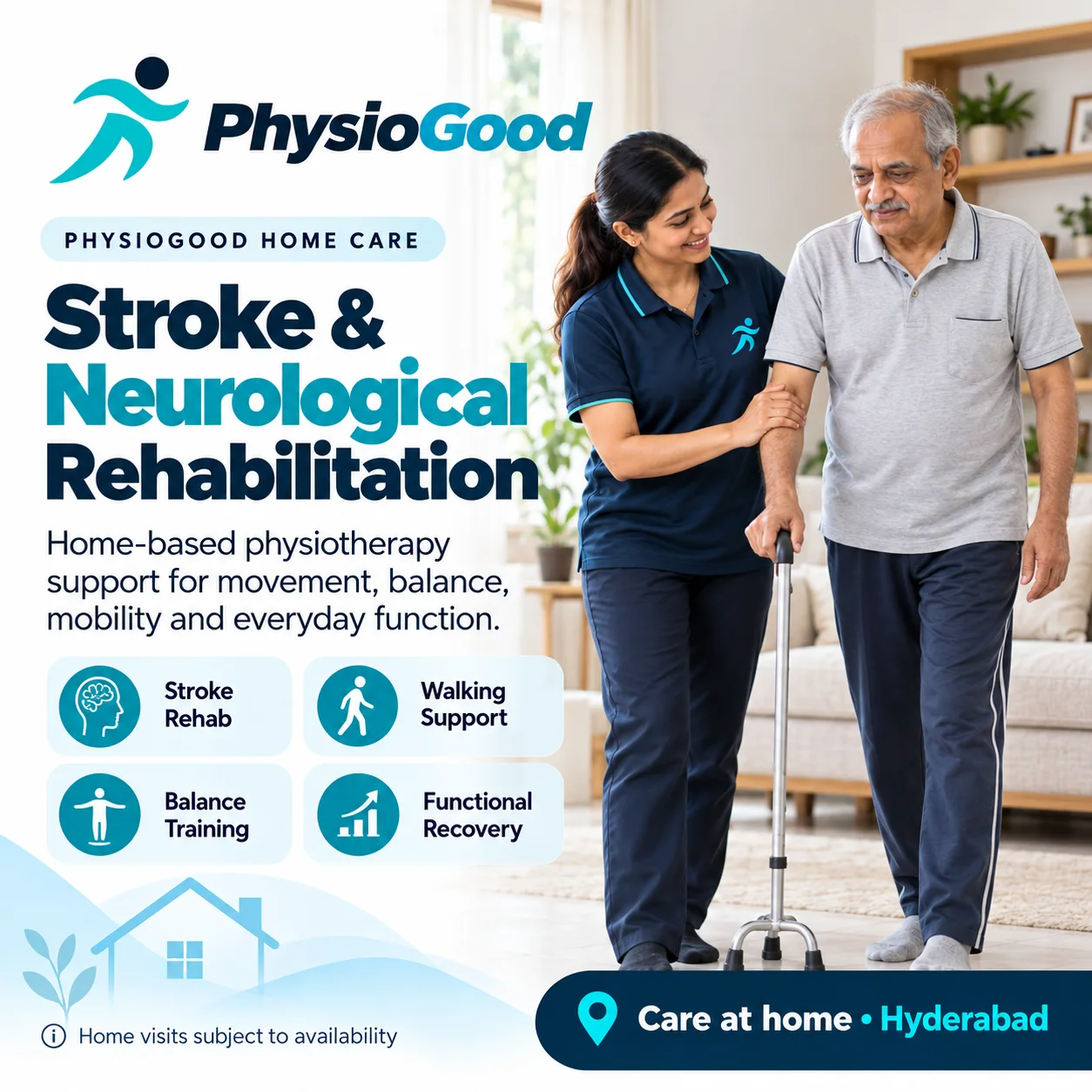
A home-visit care option
Neurological rehabilitation
Discuss functional movement goals and whether home-based support may be suitable.
Explore this serviceCare option / 05
Neurological rehabilitation is personal and ongoing. Home sessions can focus on functional movements in familiar surroundings when appropriate.
Patient, structured support for everyday movement after neurological changes. Care is individual; a physiotherapist first considers your situation and goals before discussing an appropriate plan.
A home-visit care option
Discuss functional movement goals and whether home-based support may be suitable.
Explore this serviceWhat you can ask about
These examples can help you describe your situation. They are not diagnoses or a promise of a specific treatment; suitability, relevant expertise and availability must be confirmed before care is arranged.
PHYSIOGOOD CARE GUIDE / HYDERABAD
A practical guide to understanding your next step
Published by PhysioGood. General patient information, not a diagnosis or an individual exercise prescription. Supporting sources are listed below.
Neurological changes can affect how someone stands, walks, reaches or manages a daily routine. Rehabilitation is often about practising meaningful activities with appropriate support, not completing a standard exercise list. This guide explains the concerns you can discuss with PhysioGood, the role of assessment and the boundaries of neurological physiotherapy at home in Hyderabad.
Neurophysiotherapy is another term for neurological physiotherapy. For home care, the assessment considers meaningful movement goals in familiar surroundings and the support available from family or caregivers. The team must confirm that suitable expertise, precautions and visit availability match the individual enquiry; the term does not imply that every neurological condition can be managed at home.
Neurological physiotherapy considers movement difficulties associated with the nervous system. Depending on the condition, a person may experience weakness, altered sensation, changes in muscle tone, reduced coordination or difficulties with balance. Two people with the same diagnosis can have very different rehabilitation needs. A careful conversation about current ability and everyday goals matters more than the diagnosis label alone.
Physiotherapy may be one part of a wider care plan involving medical, nursing, occupational therapy or other specialist input. It does not replace neurological follow-up, medication management or investigation of new symptoms. When you contact the team, share any diagnosis, discharge advice and treating clinician’s recommendations so the next step can be considered in the right context.
After a stroke, movement goals may include changing position in bed, sitting comfortably, standing with support or practising a walking task. Some people need assistance with transfers or reaching, while others want to work towards more demanding activities. The stage of recovery, current health and advice from the stroke team all influence what is appropriate.
A home assessment can consider the tasks a person needs in familiar surroundings, provided home-based care is suitable. A clinician may discuss supported movement practice, balance or coordination work and ways family members can assist. Rehabilitation after stroke should respect fatigue, communication needs and the person’s choices. No website can promise a return to previous function, a fixed recovery period or independent walking for everyone.
Parkinson’s disease may affect movement speed, step pattern, turning, balance and other aspects of daily life. Symptoms and ability can vary during the day. Explain what changes you notice, when they happen and any guidance from your treating team. Your medication schedule is relevant information for planning an assessment, but changes to medication belong with the prescribing clinician.
Physiotherapy may consider movement strategies, functional practice and exercises suited to individual goals. Getting up from a chair, turning in a limited space or moving around the home may be useful tasks to discuss. A method that helps one person is not automatically appropriate for another. Ask how any suggested cue or strategy should be used and what support is necessary.
Spinal cord injury rehabilitation can involve complex requirements, including medical precautions, equipment, skin protection and assistance with transfers. Peripheral nerve conditions may affect strength, sensation or specific movements. Both topics are included here as concerns to discuss, not as confirmation that every injury or specialist programme can be managed by a home physiotherapist.
Please share the established diagnosis, treating team’s advice and current rehabilitation plan when enquiring. The team must consider whether an appropriately qualified clinician, the necessary support and a suitable setting can be confirmed. Some people need a specialist rehabilitation service or multidisciplinary assessment. A general home visit should not be presented as an equivalent replacement when that level of care is required.
Balance involves more than leg strength. Sensation, vision, coordination, medical conditions and environmental demands can all influence steadiness. Coordination problems may be noticed when reaching, placing a foot or organising a sequence of movements. Describe when the difficulty occurs and whether there have been falls, near-falls or changes in symptoms.
The assessing clinician may check suitable sitting, standing or movement tasks and discuss the support needed for practice. Do not attempt challenging balance exercises alone simply because they appear in a video. The plan should specify where to practise, what assistance is required and when to stop. New dizziness, sudden unsteadiness or an unexplained fall may need medical assessment rather than routine exercise progression.
Gait means the pattern of walking. Neurological walking rehabilitation may consider starting, stepping, turning, stopping and managing changes in the environment. A person’s goal might be walking to the bathroom with assistance rather than increasing distance outdoors. Both are legitimate goals when they reflect the person’s priorities and current ability.
Assessment may include current walking aids, footwear, physical assistance and relevant home surfaces. A clinician can advise whether an existing aid is appropriate and how it should be used. Do not remove support to make a task harder without guidance. Stairs, uneven ground and crowded spaces may require separate consideration; success on one indoor task does not automatically establish safety elsewhere.
Weakness can make transfers, standing or moving an arm difficult. The meaning of strengthening in neurological rehabilitation depends on the diagnosis and what the person can currently do. Practice may involve assisted movement, selected exercises or parts of a useful activity. The clinician should explain the intended purpose and the level of effort or assistance that fits the person.
Functional practice connects rehabilitation with daily tasks. Examples include changing position, reaching for an object or preparing to rise from a chair. These are examples, not instructions to practise without assessment. Fatigue, discomfort and attention can affect performance. A suitable programme may need shorter periods of practice or changes to the task rather than repeated attempts at an unsuitable level.
Family members often help make rehabilitation practical, but support should not mean guessing how to lift, pull or move someone. Explain who assists at home, what tasks are difficult and whether that person has received training. The physiotherapist can discuss which guidance falls within the visit and whether additional professional support is needed.
The person receiving care should remain involved in decisions wherever possible. Ask permission before helping and allow time for communication. Clear instructions can cover the agreed setup, required assistance and limits of practice. If a transfer is unsafe or physically unmanageable for the available caregiver, do not continue by force. The plan needs reassessment and potentially different equipment or a different care setting.
Keep relevant discharge summaries, current rehabilitation instructions and a list of medicines available. Note the activities that matter most, what assistance is used and any recent change in function. If there are restrictions related to surgery, falls, pressure areas or other health concerns, explain them when the visit is being considered rather than waiting until exercises begin.
Tell the care team about access to the home, stairs, lift availability and the space where movement is usually practised. Do not purchase a walker or other equipment solely because it appears in this guide. Assessment and the treating team’s recommendations should inform equipment decisions. The clinician may need to clarify information or recommend medical review before starting a programme.
Useful rehabilitation goals are specific enough to discuss and review: needing less help with a particular movement, practising a transfer more confidently or completing a chosen task with a clear strategy. Outcomes vary with the condition, health, support and other factors. A smaller functional improvement may still be meaningful to the person and family.
Review should include what is easier, what remains difficult and what changes outside practice sessions. An apparent improvement during one session does not establish that a task is safe without supervision. Equally, a difficult day does not by itself prove rehabilitation has failed. Communicate persistent changes, falls or new symptoms so the plan can be adjusted or referred for appropriate medical assessment.
If you are looking for stroke rehabilitation at home in Hyderabad or support with Parkinson’s-related movement concerns, start with your diagnosis, current needs and locality. PhysioGood has information pages for places including Secunderabad, Begumpet, Gachibowli, Madhapur and other selected Hyderabad areas. Exact address coverage and clinician availability must be checked individually; a locality page is not an appointment confirmation.
Ask whether home-based neurological physiotherapy is suitable and whether the required expertise can be confirmed for the particular condition. An online consultation may help discuss some questions, but it cannot replace every physical assessment, caregiver-training need or complex rehabilitation service. The care team should clarify limitations before you rely on a remote format for a movement or safety decision.
Sudden facial droop, arm weakness or speech difficulty can be signs of a stroke. Seek emergency medical help immediately rather than sending a routine physiotherapy enquiry. Sudden severe weakness, rapidly changing neurological symptoms, new bowel or bladder problems with neurological symptoms, or serious injury also require urgent medical assessment. Do not wait for a home rehabilitation visit to investigate them.
This guide is general information and cannot distinguish an emergency from a non-urgent problem. Continue follow-up with your treating medical team and ask an appropriate medical service if new symptoms or uncertainty arise. Established rehabilitation needs and new acute symptoms should not be treated as the same kind of enquiry.
HOME VISITS IN HYDERABAD
PhysioGood offers home physiotherapy across listed Hyderabad localities. A locality page is a starting point, not a coverage guarantee: the team confirms availability for your exact address before a visit is agreed.
Exact-address coverage is confirmed with the care team, along with suitability and availability.
GOOD TO KNOW
Yes. Explain your relationship and share only information you are comfortable providing in an initial enquiry. The person’s consent, wishes and clinical circumstances should guide subsequent assessment. The team may need further details before discussing a suitable visit.
No. Meaningful goals may involve bed mobility, sitting, transfers, reaching or other daily activities. Walking is one possible focus, depending on assessment. The right priority reflects the person’s abilities, medical advice and immediate needs.
No. This is a specialist enquiry requiring a review of the condition, medical precautions and support needs. The team must confirm suitable expertise and availability or recommend another service. Inclusion in an information guide is not a promise of specialist provision.
Only follow the plan and assistance requirements given after assessment. Some activities require a caregiver or professional supervision. Ask for clarification when instructions are uncertain, and report changes rather than increasing difficulty yourself.
FURTHER READING